9 Best Network Monitoring Tools in 2026

A network monitoring tool is a “health tracker” of your entire network
As per recent Cyber reports 2026, network monitoring has become more important than ever.
There has been a massive growth of online activity and remote working! Even a small network issue can lead to big problems like slow performance, downtime or even data breaches by hackers.
Regular network monitoring helps you stay one step ahead by detecting problems early, ensuring smooth connectivity and keeping the system secure. Now, there are hundreds of network monitoring tools available online.
But if you’re new to this thing, figuring out which one is the best can be seriously confusing.
That’s why in this blog, we’re going to make things super easy for you. We’ll tell you the best network monitoring tools that are good for performance and value for money.
What does a network monitoring tool include? How is it so important in monitoring networks? To understand it in an easy manner, the tool offers you 3 important things:
- Real-time performance tracking (monitors your network 24/7 and instantly catches issues)
- Automatically alerts / notifies you the moment something goes wrong.
- Detailed reporting & analytics (to understand trends and prevent future issues)
We’ll talk about each tool’s features and pricing, so you can easily find the one that fits your needs.
So, let’s get started! 👍
What is a Network Monitoring Tools?
A network monitoring tool is a software that helps check the performance and health of a network.
In easy words, you can say that it keeps an eye on all the devices connected to your network like computers, routers, switches or servers and makes sure everything is working smoothly.

If something goes wrong, like slow internet, a broken connection or too much traffic, the tool alerts you immediately.
These tools are mostly used by network administrators and IT staff who need to keep their company’s network running 24/7. Plus, the tools help users find and fix issues before something big happens! It saves time by automating network checks, and makes sure the business stays connected and online all the time.
Top 9 Best Network Monitoring Tools in 2026
Now that we know what a network monitoring tool is and why it’s important, let’s get started with the real game! Below, we’ll explore the 9 best network monitoring software in
2026! We’ll also learn what they offer, their key features and how much they cost. Overall, this list will help you find the right tool!
⏰ TL;DR:
1. SolarWinds – Overall Best Network Monitoring Tools
2. PRTG Network Monitor – Best Network Monitoring Tools
3. ManageEngine OpManager – All-in-one Network Monitoring Tools
4. Nagios XI – Enterprise-Grade Network Monitoring Tools
5. Zabbix – Powerful Network Monitoring Tools
6. Datadog – Advance Cloud Network Monitoring Tools
7. Site24x7 – SaaS-Based Network Monitoring Tools
8. Auvik – IT Based Network Monitoring Tools
9. LogicMonitor – End-to-end Network Monitoring Tools
1. SolarWinds – Overall Best Network Monitoring Tools
SolarWinds Network Performance Monitor, an important part of SolarWinds Observability, offers a powerful solution for monitoring hybrid IT environments. It provides deep visibility across on-premises and cloud networks, helping organizations ensure uptime and minimize downtime.
- Automated device discovery
- Real-time alerting and notifications
- Network topology visualization
The tool includes customizable dashboards, advanced alerting and AIOps-driven analytics to detect and resolve network issues proactively before they impact business operations. Users can also explore network paths with NetPath and analyze performance with PerfStack, all within a unified interface.
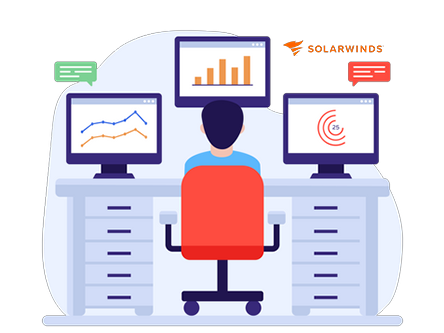
This tool also provides a 30-day free trial and robust customer support for enterprises requiring secure, behind-the-firewall performance management. Its interactive demo and customizable dashboards make it good for IT teams seeking clarity, speed, and scalability in network monitoring.
Features
- NetPath Network Visualization: NetPath allows users to visualize critical network paths end-to-end, helping identify performance bottlenecks and latency points.
- PerfStack Performance Analysis: PerfStack enables users to correlate and compare real-time network performance metrics on an intuitive dashboard.
- Advanced Alerting with AIOps: This tool integrates AIOps-driven alerting to detect problems and predict potential issues before they create trouble. Customizable alerts ensure IT teams respond proactively, minimizing downtime.
- Intelligent Network Mapping: The tool automatically creates intelligent maps of both on-premises and hybrid networks. This feature simplifies network management, offering visual clarity and faster troubleshooting.
Pricing and Plans
- Talk to the Sales Expert to get a Quote
Best For
- IT administrators
- Network engineers
- System administrators
2. PRTG Network Monitor – Best Network Monitoring Tools
Paessler, also called The Monitoring Experts, delivers PRTG Network Monitor, a powerful yet easy-to-use solution for monitoring your entire IT infrastructure.
- 250+ pre-built sensor types
- Unified monitoring dashboard
- Networks, servers, and cloud coverage
Designed for simplicity, PRTG installs in minutes, automatically discovers network devices, and provides real-time visibility into servers, routers, switches, and applications. The free edition includes up to 100 sensors for life, offering complete monitoring of hardware and network performance.
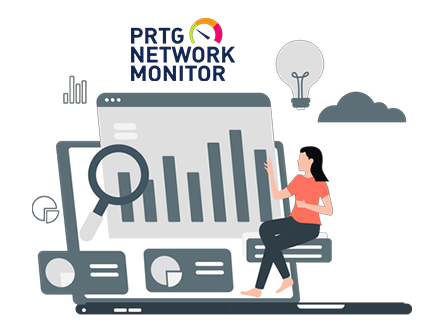
With PRTG’s simple dashboard, users can visualize performance data through customizable maps and graphs, making it easier to detect and fix network issues proactively. Its unified interface, real-time alerts, and flexible reports ensure that IT teams maintain top network health and efficiency.
Features
- Auto-Discovery & Easy Setup: It automatically scans your network and sets up relevant sensors without manual effort. This smart discovery saves valuable time and ensures your monitoring starts within minutes after installation.
- Custom Dashboards & Data Visualization: The platform offers dynamic dashboards that display traffic and performance metrics in real-time. You can create custom network maps and reports for a clear overview of your infrastructure health.
- Comprehensive Alerts & Notifications: Its advanced alerting system notifies users via email, SMS or push notifications before issues escalate. Customizable thresholds help IT teams respond quickly and prevent downtime.
- Multi-Environment Compatibility: From on-premises systems to cloud and hybrid networks, PRTG supports SNMP, WMI, Flow and more. It monitors diverse infrastructures seamlessly across distributed locations.
Pricing and Plans
- PRTG 500: $179 per month (Monitor up to 500 aspects in your network & Typically covers around 50 devices)
Best For
- Medium to Large Enterprises with Distributed Networks
- Managed Service Providers (MSPs) and IT Consulting Firms
3. ManageEngine OpManager – All-in-one Network Monitoring Tools
ManageEngine OpManager is an all-in-one network monitoring and management tool designed to provide complete visibility into the performance and health of your IT infrastructure.
- Unified fault management
- Automated monitoring workflows
- Multi-device performance tracking
It monitors routers, switches, firewalls, servers, virtual machines and storage devices in real time, helping IT teams detect and resolve network issues. With powerful visualization tools, customizable dashboards, and advanced fault management, OpManager ensures optimized network performance and minimal downtime.

Businesses can easily request a live demo or start a 30-day free trial to explore its full capabilities before deployment. OpManager combines affordability, scalability, and ease of use, making it suitable for organizations of all sizes.
Features
- Real-Time Network Performance Monitoring: OpManager provides continuous monitoring of network devices using SNMP, WMI, and ICMP protocols, ensuring that uptime, latency, and packet loss are tracked in real time.
- Traffic and Bandwidth Analysis: Using NetFlow & IPFIX, OpManager identifies bandwidth-heavy applications and top talkers in the network. This helps optimize resource allocation and maintain smooth performance across business-critical applications.
- AIOps-Powered Fault Management: The tool uses AI-driven correlation and threshold-based alerts to detect anomalies and predict potential failures.
- Comprehensive Network Visualization: From Layer2 maps to 3D data center and rack views, OpManager allows administrators to visually monitor device connections, business workflows, and health status.
Pricing and Plans
- Get Quote from the Sales Team (You need to register to request a call back)
Best For
- Enterprises and Managed Service Providers (MSPs).
- Data Center and Infrastructure Managers overseeing large-scale servers.
- Organizations of all sizes.
4. Nagios XI – Enterprise-Grade Network Monitoring Tools
Nagios XI, an enterprise-grade & extensible network monitoring solution, is built to provide full visibility across complex IT infrastructures. It enables organizations to monitor servers, routers, switches, firewalls, and applications through an intuitive, customizable interface.
- Advanced alerting engine
- Thousands of community plugins
- Extensible monitoring architecture
You can even get started for free with a trial version that includes all core features, allowing you hands-on experience with Nagios XI’s powerful capabilities before purchasing a license. The platform combines scalability and ease of use, making it perfect for every environment.
With its modern Neptune UI theme, Nagios XI offers a streamlined dashboard that enhances navigation and clarity. The system includes advanced graphs, capacity planning tools and configuration wizards for fast setup and troubleshooting.
Features
- Powerful Monitoring Engine: Built on the Nagios Core 4 engine, Nagios XI delivers fast, efficient, and scalable monitoring for thousands of network components, ensuring consistent performance across enterprise environments.
- Neptune UI Dashboard: The updated Neptune UI offers a simple, modern interface that simplifies data visualization, allowing users to quickly identify and address network issues with improved clarity.
- Capacity Planning & Trend Analysis: Integrated graphs and forecasting tools help predict infrastructure needs, enabling teams to plan upgrades proactively and maintain optimal performance over time.
- Advanced User Management: Nagios XI simplifies multi-tenant administration with granular user access controls, custom roles and secure configuration management across multiple environments.
Pricing and Plans
- It’s an open-source network monitoring tool
Best For
- Data Center Managers
- DevOps Engineers
- Cloud Infrastructure Teams
5. Zabbix – Powerful Network Monitoring Tools
Now, we’ve Zabbix, which is a powerful and easy-to-use network monitoring tool that helps you keep track of your entire network’s health and performance in real time. It collects data using SNMP or the Zabbix agent to monitor key metrics like bandwidth usage, packet loss and interface errors.
- Open-source and free
- Auto-discovery and templates
- Scales to millions of metrics
With its built-in templates for over 300 network hardware vendors, you can quickly start monitoring your routers, switches, and servers within minutes. Zabbix also supports SNMP v1, v2c and v3, making it compatible with both older and modern devices.

Zabbix alerts you instantly when there’s a problem, such as network spikes, downtime, or packet loss and even allows automated responses to fix issues. It provides long-term performance analysis, detects unusual network behavior, and can suppress alerts during maintenance to reduce noise.
Features
- Smart Alerting and Escalation: It lets you define flexible alert rules and thresholds so you only get notified when something matters. It can escalate alerts to the right teams automatically and even run remote scripts to fix issues instantly.
- Automatic Device Discovery: It can automatically scan your network to find new or removed devices and assign them the correct monitoring template. This ensures your network is always up-to-date without manual work.
- Data Transformation and Normalization: It collects data from multiple sources and converts it into clean, easy-to-read metrics. This helps maintain consistency across reports and ensures accurate tracking of network performance.
- Resource and Performance Analytics: It aggregates network metrics over time to show minimum, maximum and average values. You can analyze trends like bandwidth growth or device health, helping you plan upgrades and avoid bottlenecks.
Pricing and Plans
- Contact the Sales Team for a Premium Customized Plan
- Free trial available for 5 days
Best For
- Network Administrators
- System Integrators
- Enterprises with Large Distributed Networks
6. Datadog – Advance Cloud Network Monitoring Tools
Datadog Network Monitoring tool is an advanced observability solution that promises visibility across cloud, hybrid and on-premises environments. With its intelligent correlation between applications, infrastructure and network data, it enables teams to quickly pinpoint issues, monitor connectivity performance and ensure optimal network health.
- 750+ technology integrations
- APM and log management
- AI-powered alerting
The platform offers a free 14-day trial, allowing users to explore all Datadog capabilities without any cost or setup complexity. Built for modern, multi-cloud ecosystems, Datadog provides Cloud Network Monitoring and Network Device Monitoring to give teams a complete, hop-by-hop view of network traffic.
Datadog’s unified dashboards, real-time alerts, and intelligent insights help accelerate mean time to resolution, optimize performance, and secure connectivity across distributed systems.
Features
- Cloud Network Monitoring: Correlate application, infrastructure and network performance data in real time. It provides visibility into traffic between modern cloud-native microservices, enabling quick identification of latency across hybrid and multi-cloud environments.
- Network Device Monitoring: Monitor physical and virtual devices with extensive vendor coverage for complete WAN and hybrid visibility. By correlating NetFlow traffic and device metrics, it helps teams accelerate troubleshooting at every layer.
- Hop-by-Hop Traffic Visualization: Gain a comprehensive view of traffic paths between applications and services, from the cloud to on-premises networks. This feature allows teams to pinpoint performance issues and trace multi-cloud network issues effortlessly.
- Intelligent Insights and Alerting: Datadog’s AI-driven alerting engine tracks network issues and service-to-service interactions. With advanced dashboards, users can identify top talkers, detect suspicious DNS traffic and optimize cloud spend, all in one unified platform.
Pricing and Plans
- Free Forever plan is available (1-day metric retention & you can add Up to 5 hosts)
- $15 per host per month (1,000+ integrations, Out-of-the-box dashboards & 15-month metric retention)
Best For
- Site Reliability Engineers (SREs)
- DevOps Teams
- Cloud Architects
7. Site24x7 – SaaS-Based Network Monitoring Tools
Site24x7 by ManageEngine is a modern, SaaS-based network monitoring solution designed to give you complete visibility into every device, interface and connection across your network. Built on over 20 years of OpManager expertise, it unifies performance, traffic and configuration monitoring in a single platform.
- 130+ global monitoring locations
- Real-user monitoring built-in
- Multi-channel alerting
With Site24x7, you can enhance visibility, improve network security and lower costs by detecting and resolving issues before they impact operations. This all-in-one enterprise-scale tool lets IT teams monitor everything from routers, switches, and firewalls to VPNs, wireless devices and load balancers, all in real time.
It supports over 450 vendors and 11,000 device types, allowing you to monitor performance, bandwidth, configurations, and compliance with ease. Site24x7 provides unified dashboards, automated alerts and intelligent insights, helping your business stay connected and secure at every level.
Features
- Unified Network Visibility: Monitor all your network components, routers, switches, firewalls, VPNs, and SD-WANs, from a single dashboard.
- Network Traffic and Bandwidth Analysis (NetFlow): Gain in-depth visibility into traffic patterns using NetFlow & J-Flow protocols. Identify bandwidth-heavy applications and prevent congestion or misuse across WAN environments.
- Network Configuration Management: This tool automatically back up, track and manage device configurations while identifying firmware vulnerabilities. It ensures compliance with network policies and helps IT teams roll back to safe configurations during failures.
- Multi-Vendor and SD-WAN Support: It easily integrates with devices from Cisco, Juniper, Meraki, VMware, and more. It supports hybrid and software-defined networks through SNMP and API-based monitoring.
Pricing and Plans
- Pro Plan is for $35 per month (You get 5 Network Monitoring Interfaces)
Best For
- Managed Service Providers (MSPs)
- Network Operations Centers (NOCs)
- Cloud and Data Center Administrators
8. Auvik – IT Based Network Monitoring Tools
Now, the next best network monitoring tool is Auvik, a powerful, cloud-based network management and monitoring platform designed to give IT teams full visibility and control over their network infrastructure in minutes. Auvik eliminates the guesswork from managing complex environments!
- Automated topology mapping
- Configuration backup and restore
- Real-time traffic analysis
It detects, visualizes, and helps resolve issues before they cause disruptions, allowing teams to maintain seamless uptime and deliver reliable connectivity across every device and site. Built for modern IT operations, Auvik combines network monitoring and intelligent alerting into one dashboard.

Its automated capabilities save countless hours of manual work, enabling both MSPs and in-house IT teams to focus on strategic improvements. Auvik empowers teams with instant visibility and data-driven decisions that keep networks secure and resilient.
Features
- Automated Network Mapping: Easily visualize your network topology with real-time maps that display every device, connection, and traffic flow. Auvik automatically updates as your network evolves, giving you an always-accurate view for faster troubleshooting.
- Real-Time Network Monitoring: Monitor performance 24/7 with live data on devices, applications, and bandwidth usage. Auvik instantly detects outages and anomalies, helping you resolve issues before they escalate or impact end-users.
- Intelligent Network Alerting: Reduce mean time to resolution with 50+ pre-configured alerts and customizable notifications. View alerts directly on affected devices, integrate with tools like Slack or ServiceNow, and proactively address trends before they cause downtime.
- Automated Configuration Management: Automatically back up, compare, and restore device configurations with complete version control. This tool tracks every change for security and audit readiness, keeping your network safe from misconfigurations or unauthorized edits.
Pricing and Plans
- Contact the Sales Team to get your custom pricing estimate.
Best For
- Enterprise IT Teams
- Managed Service Providers
- Manufacturing & Industrial Firms
9. LogicMonitor – End-to-End Network Monitoring Tools
LogicMonitor’s LM Envision delivers complete end-to-end network observability, spanning cloud, data center, and edge devices, all within a single unified platform. With real-time visibility, AI-driven insights, and automated discovery, IT teams can detect and resolve issues before they impact users, ensuring optimal performance and minimal downtime.
- 2,000+ pre-built integrations
- AI-powered anomaly detection
- Hybrid infrastructure monitoring
The intuitive dashboards bring clarity across complex environments, helping teams visualize device relationships, monitor live metrics, and act faster when issues arise. LM tool also helps organizations prevent service disruptions, reduce missed SLAs and eliminate stressful late-night incidents.

With AI-powered correlation and smart alerting, LogicMonitor empowers teams to stay in control of their networks, reduce risks, and accelerate recovery from incidents.
Features
- Real-Time Dashboards & Visualization: LogicMonitor provides customizable, role-based dashboards that deliver actionable insights for operations, leadership, and customers. Teams can track health and availability across every network component in real time.
- Automated Discovery & Topology Mapping: LM Envision automatically discovers routers, switches, and firewalls using scheduled IP range scans. It generates dynamic Layer 3 maps that visualize device relationships, allowing quick identification of root causes.
- Intelligent Alerting & Predictive Insights: With AI-driven alert correlation and predictive analytics, LogicMonitor reduces noise and prioritizes critical events. Alerts are routed automatically to the right teams with full-stack context, logs, metrics and topology.
- Network Traffic Analysis & Performance Monitoring: Gain deep visibility into network traffic patterns, applications, and protocols to detect top talkers and bandwidth-heavy services.
Pricing and Plans
- Essential Plan: $16 per hybrid unit (Hybrid Infrastructure Monitoring)
Best For
- DevOps Teams
- NOC (Network Operations Center) Analysts
- Telecommunications and Service Providers
What to Look for in a Network Monitoring Tool?
Getting the right network monitoring tool can be a difficult task because there are so many options out there. Every IT manager and let’s say, a system administrator should know what features to look for before making a decision.
To make things easier, we’ve listed the top 6 features that every network monitoring user should check to get the best tool possible.
Real-Time Monitoring
The tool should provide live data and instant updates about network performance. Real-time monitoring helps detect problems as they happen so that you can fix them quickly before they affect users or customers.
Alert System
A good monitoring tool must send notifications or alerts when something goes wrong. Alerts can be sent via email, SMS, or app notifications so network admins know immediately when an issue occurs.
Performance Reports and Analytics
The tool should generate clear reports and analytics showing how the network performs over time. This helps IT teams identify recurring issues, track improvements, and plan for upgrades.
Easy-to-Use Dashboard
The dashboard should be simple and easy to understand. It should allow users to view important information quickly without needing advanced technical knowledge.
Device Discovery and Mapping
This feature automatically finds all devices connected to your network and creates a visual map. It helps users see how everything is connected and makes troubleshooting faster and easier.
Scalability
A good network monitoring tool should grow with your business. Let’s say you have 10 devices or 100, the tool should handle your expanding network without losing speed or performance.
Benefits of Using a Network Monitoring Tool
A network monitoring tool helps IT staff and network administrators keep their systems running. It detects problems early, improves performance and saves time by automating monitoring tasks. It ensures your business network stays fast and secure.
Early Problem Detection
The tool alerts users about network issues before they cause serious damage. This helps reduce downtime and keeps your network running smoothly.
Better Network Performance
By tracking speed, usage, and traffic, these tools help you optimize your network. You can easily identify what’s slowing it down and take steps to improve efficiency.
Increased Security
Monitoring tools help spot unusual or suspicious activity. This makes it easier to detect cyber threats or unauthorized access before they cause harm.
Time and Cost Savings
Automating the process of network checking saves a lot of manual effort. It reduces the need for constant human supervision and helps companies avoid expensive network failures.
What’s the difference Between Open-Source and Paid Network Monitoring Tools?
Many people often get confused about whether to choose an open-source network monitoring tool or a paid one. Don’t worry! As below, we’ve made it simple for you.
Here’s a clear difference between the two, showing who should use which one, when it’s best to use them, and what they’re good for.
| Category | Open-Source Network Monitoring Tools | Paid Network Monitoring Tools |
| What | Free tools that anyone can use and customize. They’re community-supported. | Premium tools developed by companies that offer customer support and regular updates. |
| Who | Best for beginners, or small IT teams with technical knowledge. | Best for medium to large businesses and professional IT departments. |
| When | When the budget is limited or for learning/testing purposes. | When you need reliable, 24/7 support and advanced features. |
| For What | Good for small networks or custom setups where you can manage things manually. | Perfect for large, complex networks needing automation, scalability, and guaranteed uptime. |
FAQs
Which is the best free network monitoring tool?
If you’re looking for a free network monitoring tool, Paessler PRTG Network Monitor (Free Version) and Zabbix are great options. PRTG is easy to use and gives you a clear view of your whole network through one dashboard. Zabbix is also completely free and open-source, which means you can use all its features without paying.
Is Datadog suitable for small businesses?
Yes! Datadog is actually a good choice for small businesses. It’s cloud-based, which means you don’t need to install heavy software or buy extra servers. It gives you easy-to-understand dashboards, automatic alerts, and AI features that help find problems before they affect your business.
How does SolarWinds compare to ManageEngine?
SolarWinds is known for its deep, detailed monitoring and is widely used by large companies. It has a clean interface and strong alert systems but can be expensive. ManageEngine OpManager, on the other hand, is more budget-friendly and easier to set up.
Can I monitor multiple networks remotely?
Yes, absolutely! Most modern tools like Datadog, PRTG, SolarWinds and Auvik let you monitor multiple networks from anywhere using the cloud. You can see devices from different locations, get alerts and even fix problems remotely.
Which network monitoring tools support AI automation?
Tools like Datadog and LogicMonitor use AI and machine learning to make monitoring smarter. They can automatically detect unusual behavior, predict possible outages and even recommend fixes. Datadog’s AI, called “Watchdog” is especially popular because it studies your network data and alerts you before something goes wrong.
What metrics should I monitor regularly?
The most important metrics to keep an eye on are bandwidth usage (that shows how much data is being used), network uptime and downtime (that tells you if your network is running smoothly or not), Latency (that measures delays in data transfer), Packet loss (shows if data is being lost during transfer) and CPU and memory usage (that helps track how well your devices and servers are performing). Monitoring these regularly helps you find problems early and keep your network fast.
Are these tools compatible with cloud environments?
Yes! Most monitoring tools fully support cloud environments like AWS and Google Cloud. Datadog, SolarWinds Hybrid Cloud Observability and LogicMonitor are especially good at this thing. They help you monitor both on-premise (local) and cloud systems together in one dashboard.
What is the best tool for real-time monitoring?
For real-time monitoring, Datadog and PRTG Network Monitor are good. They both give instant updates, live dashboards and alerts within seconds if anything goes wrong. Datadog is cloud-based and shows live data from all your systems, while PRTG gives real-time maps and graphs that show exactly what’s happening in your network.
Conclusion
Every user needs a network monitoring tool! Let’s say you run a small business or let’s say you’re managing an IT team, network monitoring tools help keep everything running smoothly behind the scenes.
They’re important because they save time and money. Instead of manually checking for issues, the tools automatically alert you when something’s off, so you can fix problems before they cause downtime.
This means fewer interruptions, faster troubleshooting, and more reliable performance. Beyond that, these tools also help improve security, optimize bandwidth, and boost overall efficiency by giving you a clear view of how your network is performing.
By listing the top 9 best network monitoring tools, we’ve done the main work for you. We’ve compared their features, strengths, and pricing so you can choose the right one confidently.
Also read: Network solutions reviews



Table of Contents
- What is a Network Monitoring Tools?
- Top 9 Best Network Monitoring Tools in 2026
- 1. SolarWinds - Overall Best Network Monitoring Tools
- 2. PRTG Network Monitor - Best Network Monitoring Tools
- 3. ManageEngine OpManager – All-in-one Network Monitoring Tools
- 4. Nagios XI – Enterprise-Grade Network Monitoring Tools
- 5. Zabbix – Powerful Network Monitoring Tools
- 6. Datadog – Advance Cloud Network Monitoring Tools
- 7. Site24x7 – SaaS-Based Network Monitoring Tools
- 8. Auvik – IT Based Network Monitoring Tools
- 9. LogicMonitor - End-to-End Network Monitoring Tools
- What to Look for in a Network Monitoring Tool?
- Benefits of Using a Network Monitoring Tool
- What’s the difference Between Open-Source and Paid Network Monitoring Tools?
- FAQs
- Conclusion