Table of Contents
- What is Decentralized VPN?
- What is the difference between centralized and decentralized VPN?
- 8 Best Decentralized VPN For April 2026
- 1. Mysteriumvpn - Overall Best Decentralized VPN
- 2. Deeper.network - Best Decentralized VPN
- 3. Privadovpn - Privacy-Focused Decentralized VPN
- 4. Kelvpn - Lightweight Decentralized VPN Powered by Blockchain
- 5. Sentinel.co - Open-Source dVPN for Maximum Transparency
- 6. Nym.com - Decentralized VPN with Advanced Privacy Mixnet
- 7. Tachyon.eco - Decentralized VPN with Advanced Privacy Mixnet
- 8. VPNsecure.me - Affordable Decentralized VPN with No Logging
- How to Choose the Right decentralized VPN for You?
- Why choose a decentralized VPN in 2025?
- FAQ’s
- Conclusion



8 Best Decentralized VPN for April 2026– Protect Your Privacy
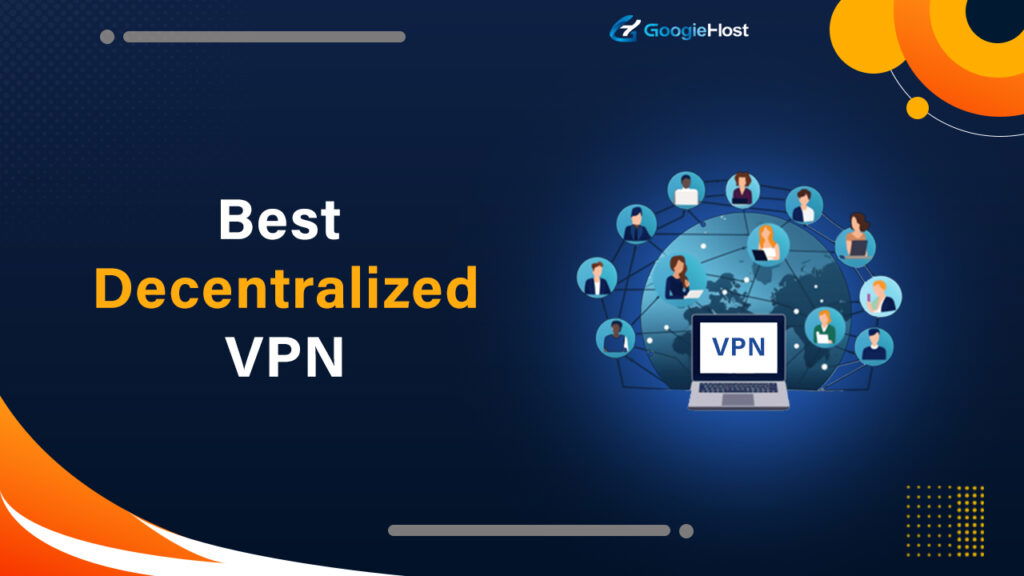
Have you ever gotten yourself into a situation where, even though you’re using a VPN, you’re unable to access a website because it detects your VPN usage and blocks your access? This common issue happens because old VPNs often rely on centralized servers (physical VPN servers), making them more susceptible to detection and blocking by websites and agencies.
Are you really sure that your data is not logged by your VPN provider? Many VPN services claim to have a “no-logs” policy, but without transparency, (without any auditing) it’s challenging to verify these claims. If they truly do not log data, how do they monitor if you’re misusing VPN for illegal activities or not? This lack of transparency raises concerns about the privacy and security offered by traditional VPNs.
To answer all your questions above, let’s tell you about decentralized VPNs or dVPNs and how it solves your issues. It is not like traditional VPNs that route your internet traffic through centralized servers. Instead dVPNs use a decentralized network of nodes (essentially, other users’ devices / peers) to route your traffic. This peer-to-peer (P2P) approach boosts privacy, reduces the risk of data logging to 0% and makes it harder for websites to detect and block VPN usage.
In this blog post, we’ll talk about the top 8 best Decentralized VPN for 2025, even tell you about their unique features and starting prices to help you choose the best option as per your need. So, without wasting even a single more minute, let’s understand what dVPN actually is. 👍
What is Decentralized VPN?
In very simple words, a decentralized VPN is a new type of VPN that uses blockchain technology (decentralized network / P2P network) to create a more secure, private and zero censorship internet experience.
See! It is not like traditional VPNs, which rely on centralized servers owned and managed by a single company, decentralized VPNs distribute the network infrastructure (like the resources RAM, CPU, bandwidth to keep the connection on 24/7) across a global network of individual nodes.
The core idea behind a decentralized VPN is to offer 100% anonymity and encryption benefits of a traditional VPN, but in a decentralized way. It uses blockchain to verify users and node operators without relying on a central authority. When a user connects to a dVPN, their data is routed through several nodes in the network. Each node only knows the IP address.
So, what’s the key difference between a traditional VPN operating through centralized servers controlled by a single company and a dVPN functioning through a decentralized network of nodes, eliminating single points of control and failure. Let’s check it out 🙂
What is the difference between centralized and decentralized VPN?
It’s like, a centralized VPN is managed by a single provider that controls the servers and user data, which can sometimes lead to privacy concerns if the provider logs or shares information. whereas, a decentralized VPN (dVPN) distributes the network across multiple nodes run by individual users, enhancing privacy and reducing the risk of data tracking.
To explain the things in very easy words, our research team has provided you with an illustration and a table below to draft a clear difference between a centralized and a decentralized VPN:
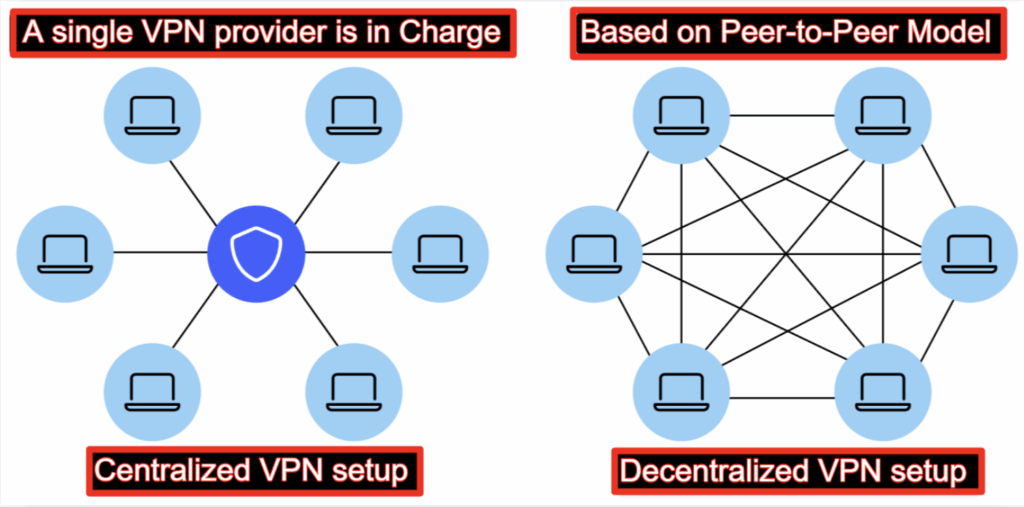
The table is as under:
| Centralized VPN | DeCentralized VPN |
| Operated by a Single Company | Run by Multiple Users / Peers / Nodes |
| Provider MAY log user activity | No chance of data logging (not possible) |
| Security can be compromised due to single server | Harder to attack due to distributed setup |
| VPN can get blocked by websites | Can’t be blocked due to scattered nodes |
| Good speed | Slow speed |
8 Best Decentralized VPN For April 2026
Having said that, below, we’re gonna tell you the top 8 decentralized VPN providers that offer you affordable pricing, good features for gaming things and latest insights to help you understand if the providers can prove to be a good pick or not. 👍
⏰ TL;DR:
1. Mysteriumvpn – Overall Best Decentralized VPN
2. Deeper.network – Best Decentralized VPN
3. Privadovpn – Privacy-Focused Decentralized VPN
4. Kelvpn – Lightweight Decentralized VPN Powered by Blockchain
5. Sentinel. co – Open-Source dVPN for Maximum Transparency
6. Nym. com – Decentralized VPN with Advanced Privacy Mixnet
7. Tachyon.eco – Decentralized VPN with Advanced Privacy Mixnet
8. VPNsecure.me – Affordable Decentralized VPN with No Logging
1. Mysteriumvpn – Overall Best Decentralized VPN
Our tech team researched all day to get the latest list of the best decentralized VPN for 2025, 1st option being MysteriumVPN that happens to be the world’s largest decentralized VPN network, termed “The People’s VPN.”
- Peer-to-peer network architecture
- Residential node network
- Earn tokens sharing bandwidth
Using the power of a global community, it offers over 20,000 residential IPs across 135+ countries, ensuring users can hide their browsing activity, bypass censorship, and avoid public Wi-Fi spying without the risk of VPN detection.
The service supports up to 6 simultaneous connections, allowing multiple devices like macOS, Android, and more to stay protected under a single subscription.
Key Features
- Decentralized Network Powered by Residential Nodes: It operates on a decentralized infrastructure. This means that users connect through a global network of residential nodes, contributed by individuals worldwide.
- Extensive Global Coverage with Over 20,000 IPs: It offers a network of over 20,000 unique IPs spread across 135+ countries. This vast coverage allows users to access content from virtually any region, bypass geo-restrictions, and enjoy a truly global internet experience.
- Advanced Security Protocols with WireGuard Integration: It integrates the WireGuard protocol, known for its high-speed performance and strong encryption. Plus, features like a kill switch, DNS leak protection, and a strict no-logs policy ensure that user data remains confidential.
- Multi-Platform Support with User-Friendly Interface: It offers applications for various platforms, including Windows, macOS, Android, and iOS. The user-friendly interface ensures that even those new to VPNs can navigate and utilize the service with ease.
Pricing
- Starting Price: $3.19 per month (2-Year Plan + 7 Days Money Back Guarantee)
2. Deeper.network – Best Decentralized VPN
Following the same list, now we’ve Deeper Network that offers a decentralized VPN solution powered by over 200,000 nodes across 150+ countries, ensuring stronger privacy, true anonymity, and freedom from censorship.
- Hardware-based VPN device
- Decentralized peer-to-peer
- Web3 integration
Not like old VPNs that rely on central servers, Deeper Network’s Decentralized Private Network (DPN) employs a peer-to-peer architecture, removing the need for subscription fees and ensuring a 100% no-log policy.
The Deeper Connect device is the world’s first decentralized hardware VPN, providing top-class cybersecurity, privacy protection and Web3 mining capabilities. With a one-time hardware purchase, users gain lifetime access to secure and private internet without recurring costs. The device also supports unlimited devices, offering end-to-end encrypted data transmission, a 7-layer firewall, DNS encryption, and threat intelligence to prevent data leaks and cyber threats.
Key Features
- Decentralized Private Network: It replaces traditional centralized VPN servers with a peer-to-peer network of over 200,000 nodes. This arrangement ensures enhanced privacy, true anonymity, and resistance to censorship, as user data is encrypted.
- Smart Routing and Multi-Routing: The device intelligently routes internet traffic through the fastest and most efficient paths using Smart Routing. Multi-Routing allows simultaneous connections to multiple global nodes, enabling users to access content from different regions.
- Enterprise-Grade Security: Equipped with a 7-layer firewall, DNS encryption and threat intelligence, Deeper Connect provides huge protection against cyber threats. It also offers ad and tracker blocking, parental controls, and real-time threat detection.
- Lifetime Subscription-Free Operation: With a one-time hardware purchase, users gain lifetime access to Deeper Network’s services without any recurring subscription fees. This model, combined with the ability to earn passive income through bandwidth sharing, offers good idea.
Pricing
- Starting Price: $99.95 per year (DPN / VPN)
3. Privadovpn – Privacy-Focused Decentralized VPN
Now, we have PrivadoVPN, which is a Swiss-based dVPN provider that offers robust online privacy and security features. Uses 256-bit AES encryption, it ensures that all user data, including browsing activities and app usage, remains secure and inaccessible to unauthorized parties.
- Swiss-based privacy jurisdiction
- Generous free tier available
- Zero-log policy
Users can try PrivadoVPN risk-free for 30 days, thanks to its 100% money-back guarantee. The service offers unlimited data and device usage, ensuring uninterrupted access to online content.
With features like streaming support, ad blocker, threat prevention, and parental controls, PrivadoVPN takes care of a wide range of user needs.
Key Features
- Control Tower: PrivadoVPN’s Control Tower offers a decentralized hub for managing online security features. It includes an ad blocker that reduces pop-ups, banners, and video ads, enhancing the browsing experience.
- Parental Controls for Safe Browsing: The Parental Controls feature allows users to restrict access to specific websites and social media platforms, protecting children from inappropriate content.
- High-Speed Global Servers: Offers a network of high-speed servers located in 60 cities across 47 countries. This nice network ensures fast and reliable connections, enabling users to stream content, download files, and browse the internet without interruptions.
- Zero-Log Policy with Swiss Privacy Laws: Working under Switzerland’s strict privacy laws, PrivadoVPN follows zero-log policy, meaning it does not record or store any user activity.
Pricing
- Starting Price: $1.11 per month (2-Year Plan + 3 Months Free + 30 days Money Back Guarantee)
4. Kelvpn – Lightweight Decentralized VPN Powered by Blockchain
What’s good with KelVPN? So, it is a decentralized, quantum-resistant VPN service that provides the highest level of protection for your network connection, including protection from quantum threats.
- Quantum-resistant encryption
- Cellframe blockchain-based
- Future-proof security
Built on the Cellframe blockchain, KelVPN ensures that your internet activity remains private and secure by distributing data across multiple nodes, eliminating the need for centralized servers.
To connect your device to a VPN server, KelVPN uses its self-owned DAP SDK protocol, which is encrypted under the standard HTTP protocol and can be wrapped in other protocols if necessary. This unique approach allows for easy integration and enhanced security, providing users with a reliable and efficient VPN experience.
Key Features
- Quantum-Resistant Encryption: It employs advanced post-quantum cryptographic algorithms to protect your data against potential threats posed by quantum computing. This ensures that your information remains secure now and in the future, even as technology evolves .
- Decentralized Architecture: It works on a distributed network of blockchain nodes. This decentralized model enhances security, reduces the risk of data breaches, and eliminates single points of failure, providing a more robust VPN service .
- Proprietary DAP SDK Protocol: Uses its own Decentralized Application Protocol (DAP SDK), which is encrypted under standard HTTP and can be wrapped in other protocols as needed. This unique protocol offers enhanced security features and flexibility.
- 100% Anonymity: The blockchain-based design ensures that no personal information is collected or stored. By routing traffic through a network of decentralized nodes and employing onion routing techniques, KelVPN provides complete anonymity.
Pricing
- Starting Price: $3.59 per month (1-Year Plan)
5. Sentinel.co – Open-Source dVPN for Maximum Transparency
The first dVPN provider that is open-Source, Sentinel, is a fast and censorship-resistant decentralized VPN (dVPN) provider that prioritizes transparency and user empowerment. Built on the Cosmos blockchain, it allows anyone to inspect, modify, and build upon its source code, fostering a community-driven ecosystem.
- Open-source VPN framework
- Cosmos blockchain powered
- Marketplace-driven providers
This transparency enables developers and individuals to create their own dVPN applications tailored to specific needs, promoting innovation and adaptability.
With over 3,500 active nodes worldwide, Sentinel offers a big network that ensures secure and private internet access, even in regions with heavy censorship. Users can also contribute to the network by running a node, earning passive income in the form of DVPN tokens, thereby participating in the network’s growth and decentralization.
Key Features
- Open-Source and Transparent Framework: The commitment to open-source development ensures that its source code is accessible to everyone. This transparency allows users and developers to audit, modify, and enhance the platform according to their requirements.
- Decentralized Network with Over 3,500 Active Nodes: Operating on a decentralized infrastructure, it connects to a network of over 3,500 active nodes distributed globally. This extensive network ensures high availability and No single points of failure.
- Earn Passive Income by Running a Node: It offers users the opportunity to earn passive income by contributing their unused bandwidth to the network. By running a node, participants receive DVPN tokens as compensation, incentivizing network expansion and stability.
- Advanced Protocol Support for Enhanced Privacy: To ensure secure and unrestricted internet access, It uses advanced protocols like V2Ray. These protocols enable users to bypass firewalls and access geo-restricted content while maintaining anonymity.
Pricing
- Download the Sentinel dVPN app on your Windows PC for Free
6. Nym.com – Decentralized VPN with Advanced Privacy Mixnet
Next, we’ve NymVPN that shines as the world’s most private VPN, offering a decentralized and open-source solution that ensures maximum anonymity when you need it most. NymVPN employs a unique combination of a decentralized mixnet and zero-knowledge proofs, allowing users to verify payments without revealing their identities.
- Mixnet privacy technology
- Network-level anonymity
- Timing obfuscation
With NymVPN, you can block trackers and malware, hide your IP address, prevent price discrimination, access restricted content, and keep your identity and activity private. Its decentralized WireGuard network ensures fast connections without compromising security.
Key Features
- Decentralized Mixnet Architecture: It utilizes a decentralized mix network (mixnet) that routes your internet traffic through multiple nodes, each adding a layer of encryption.
- Zero-Knowledge Proof Payments: With the implementation of zero-knowledge proofs, NymVPN allows users to make payments via BitCoin and access services without revealing any personal information.
- Dual-Mode Operation: It offers two operational modes! First is a fast 2-hop WireGuard mode for everyday browsing and second is the 5-hop Noise Generating Mixnet mode for maximum anonymity.
- Open-Source Transparency: All of NymVPN’s code is open source, allowing for community scrutiny and ensuring there are no hidden backdoors or malicious software.
Pricing
- Starting Price: $5.49 per month (2-Year Plan + 30 days Money Back Guarantee)
7. Tachyon.eco – Decentralized VPN with Advanced Privacy Mixnet
Next is Tachyon VPN, a decentralized VPN built on the Tachyon Protocol, a technology trusted by over 50 million users. This protocol ensures that internet traffic moves from place to place privately, securely, and quickly, offering a new level of online privacy and freedom.
- VPN, DNS, and storage suite
- Censorship-resistant design
- Peer-to-peer infrastructure
Tachyon VPN operates without central servers, making it more private, secure, and faster than centralized solutions. Users can download Tachyon VPN for macOS, iOS, and Android devices to experience this next-generation VPN service.
By making use of blockchain technology and a P2P network, Tachyon VPN provides a censorship-resistant internet experience. Its decentralized nature means that no single entity controls the network, reducing the risk of data breaches and surveillance. With features like multi-path routing and protocol simulation, Tachyon VPN offers enhanced security and speed.
Key Features
- Decentralized Network Architecture: Operates on a decentralized network, eliminating the need for central servers. This structure boosts user privacy and security, as there is no central point weak to data breaches or government surveillance.
- Multi-Path Routing: To prevent single-point attacks and improve connection reliability, Tachyon VPN employs multi-path routing. This technique splits user data into multiple paths, making it more difficult for malicious actors to intercept.
- Protocol Simulation: Tachyon VPN uses protocol simulation to disguise internet traffic, making it appear as regular HTTPS or SMTP traffic. This feature helps users bypass network restrictions and censorship by masking VPN usage.
- IPX Token Integration: The mix of the IPX token within Tachyon’s ecosystem allows for a decentralized bandwidth marketplace. Users can earn IPX tokens by providing bandwidth as node operators, incentivizing network participation and growth.
Pricing
- Download the Tachyon.eco app on your MacOS for Free
8. VPNsecure.me – Affordable Decentralized VPN with No Logging
And now the last option that we have is VPNSecure.me, a VPN service that offers a 30-day trial for $1, providing users with online privacy and security. It encrypts web traffic and conceals IP addresses, ensuring anonymity and protection from surveillance.
- Stealth VPN mode
- Smart DNS for streaming
- Traffic obfuscation technology
The service includes an ad blocker that removes ads from most apps and websites, enhancing the browsing experience. VPNSecure.me offers a global community and supports various protocols, including OpenVPN, HTTP Proxy, Smart DNS, and PPTP.
The service emphasizes user privacy by maintaining a strict no-logs policy, ensuring that browsing activities are not stored or monitored.
Key Features
- Ad & Tracker Blocker VPN: It includes an ad and tracker blocker that removes ads from web browsers like Chrome, Safari, and Firefox, as well as from most apps on Android and iOS. This feature enhances the browsing experience as well.
- Stealth VPN: The Stealth VPN feature allows users to bypass internet censorship and restrictive firewalls by disguising VPN traffic to appear as regular HTTPS traffic. This is particularly useful in countries with heavy internet censorship.
- Choose Cipher Strength: Offers users the ability to select their preferred encryption cipher, ranging from 64-bit to AES-256. This flexibility allows users to balance between speed and security based on their specific needs.
- Meta Search: This feature is a privacy-focused metasearch engine included in all premium VPN plans. It proxies search results from leading search engines without sharing users’ IP addresses or search history, ensuring private and secure search activities.
Pricing
- Starting Price: $2.99 per month (3-Year Plan + 30 days Free Trial available)
How to Choose the Right decentralized VPN for You?
It is true that picking the best flower from a garden full of fragrant blooms is never easy. Every petal is beautiful, every scent unique. In the same way, choosing the right decentralized VPN can feel challenging.
With so many great options in the online market, it’s tough to decide which one really fits your needs. But don’t worry, we’ve made it easier for you. Here are the top 5 key factors you should keep in mind when selecting the perfect dVPN for yourself:
Security Standards
Always check what kind of security features the dVPN offers. Please look for military-grade encryption, secure tunneling protocols and extra protections like kill switches. A good dVPN should make it nearly impossible for hackers to keep an eye on your internet activity.
No-Logs Policy
One of the main reasons people switch to dVPNs is privacy. Make sure your chosen dVPN follows a strict no-logs policy, meaning it doesn’t track or store your browsing history, connection logs, or personal details. With decentralized systems, this is usually a standard feature, but please double-check!
Ease of Use
Techy tools don’t have to be hard to use. Look for a dVPN that offers a clean, easy-to-navigate app interface. If you’re using it on your phone, desktop, or tablet, it should be user-friendly and not require deep tech knowledge to handle.
Community & Network Size
The more nodes (peers) a dVPN has, the better your connection options. A larger community means better performance, faster speeds and stronger resistance against shutdowns. It also shows trust! Naturally people do not join a network they don’t believe in.
Affordability & Payment Flexibility
Decentralized VPNs often offer affordable plans. Some even accept crypto payments (BitCoin) for extra privacy. Make sure the pricing fits your budget and check if the service gives you a trial or money-back guarantee before you purchase.
Why choose a decentralized VPN in 2025?
The internet has changed a lot, and so have the threats as well. Decentralized VPNs (dVPNs) have become the new trend for online privacy and security. Here’s why switching from a centralized VPN to a dVPN is a smart move:
More Privacy, Less Worry
Centralized VPNs store your data on one main server, which can be a target for governments or hackers. A dVPN, on the other hand, spreads your data across many nodes worldwide, making it practically impossible for anyone to track or trace your activity. It’s like hiding a needle in the desert.
True Security
With dVPNs, there’s no single point of failure. Even if one node is compromised, the rest of the network stays secure and up all the time. This makes your internet activity safer than ever before, especially when compared to traditional VPNs, which can go down or crash.
Freedom from Surveillance
No more fear of being watched! Since dVPNs don’t rely on one central server, there’s no big brother collecting logs or monitoring your internet usage. You’re in control and your online identity stays anonymous at all times.
Unrestricted Access Anywhere
Some centralized VPNs get blocked by governments. But with dVPNs, your internet traffic can flow through hundreds of different network paths, helping you bypass censorship, geo-restrictions and internet shutdowns.
Community-Powered & Open Source
Most dVPNs are open-source, which means their code is available to the public. This type of transparency builds trust. Plus, they’re backed by global communities, not big corporations, so you’re not just a customer, you’re part of a network.
FAQ’s
Yes! Decentralized VPNs are legal in most countries like in the US, the UK, France, Germany, Asian countries and more. Just like regular VPNs, they help protect your privacy online.
Yes! You can earn money by participating in a decentralized VPN network. Many dVPNs allow users to earn money by sharing their unused internet bandwidth. But the income is usually small and depends on how much bandwidth you share.
Not really! Some decentralized VPNs are newbie-friendly and easy to set up, just like regular VPNs. However, a few might need some extra steps. It all depends on what dVPN provider you choose.
Sometimes, yes. Since traffic is routed through multiple users instead of company-owned servers, speed and connection quality can differ. It might be slower or less stable than traditional physical VPNs, especially during peak times.
Only more privacy! In a decentralized VPN, there’s no central company controlling the data. This means there’s less chance of your data being tracked, logged or shared.
As far as 100% privacy, larger community network, 20K+ unique IPs and secure connection is concerned, Mysterium, KelVPN and Sentinel happen to be the best dVPN.
The advantages of using a dVPN are more privacy, (where no central authority is storing your data), Better security, (Harder for hackers to attack one single point), and More control (Users have control on how the system works).
The risks of using dVPN are performance issues (Speeds can vary), At times, you have Security risks (Not all nodes (users sharing bandwidth) are trustworthy) and Less support (Since there’s no central company, help can be limited.)
The basic difference between a VPN and a decentralized VPN is that dVPN, powered by a network of users, has no single company that controls it, thereby giving you more privacy and freedom. And a traditional VPN is controlled by a company and All the traffic goes through the servers.
Conclusion
Privacy and security are really the most important thing for anyone. Decentralized VPNs (dVPNs) offer a nice solution by removing centralized control, thereby reducing the risk of data logging and enhancing user privacy. With no single company handling the network, your data is less susceptible to govt / ISP tracking.
Plus, the decentralized nature of Decentralized VPNs provides advanced security. If one node in the network fails, others take over, ensuring back-to-back and uninterrupted connectivity. This design (P2P thing) not only helps in bypassing censorship and geo-restrictions but also enhances network reliability.
In this entire blog, we’ve told you about 8 best dVPN providers, each offering unique features and pricing plans. We encourage you to evaluate these features carefully, considering your specific need, to select the dVPN that best fits with your online privacy and security goals.