
10 Best IT Infrastructure Monitoring Tools for 2026

The demands placed on IT infrastructure are increasing rapidly as businesses rely more heavily on digital systems, cloud platforms, and always-available services. From internal operations to customer-facing applications, every component must perform reliably to avoid disruptions. Monitoring tools provide the visibility needed to track performance, identify risks, and maintain stability across complex environments.
In 2026, monitoring platforms are more advanced than ever, offering automation, predictive insights, and centralized dashboards that simplify infrastructure management. The best tools allow IT teams to proactively detect issues, optimize resources, and ensure systems remain healthy as infrastructure scales.
Below are ten of the best IT infrastructure monitoring tools that organizations should consider.
1. SolarWinds
SolarWinds is a well-established infrastructure monitoring platform known for its reliability and comprehensive feature set. It provides centralized visibility across networks, servers, applications, and cloud systems, making it easier for IT teams to manage large and complex environments.
One of SolarWinds’ strongest capabilities is Network Monitoring, allowing administrators to track device availability, traffic patterns, and overall connectivity. This visibility helps teams identify network disruptions quickly and maintain consistent performance across their infrastructure.
The platform also provides detailed performance metrics, helping teams analyze trends and prevent future issues. Its customizable dashboards and automated alerts allow IT professionals to respond immediately when thresholds are exceeded. SolarWinds is particularly valuable for enterprises that require deep visibility and scalable monitoring solutions.
2. Datadog
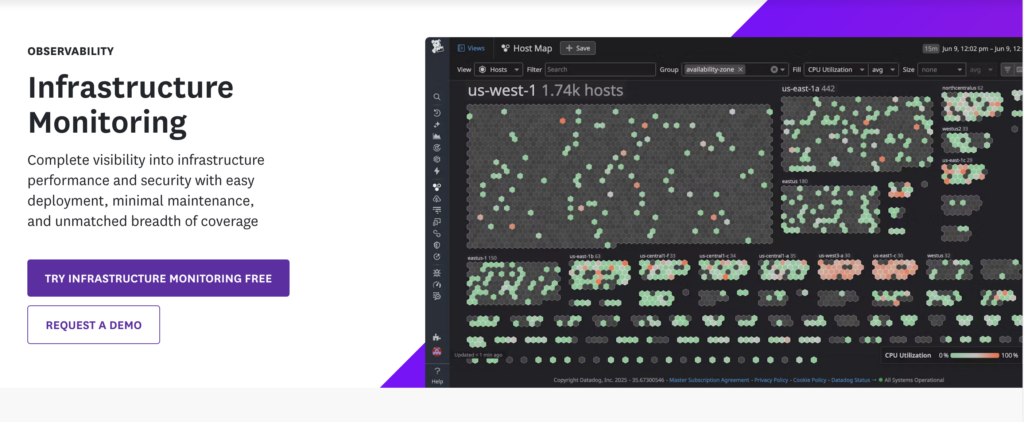
Datadog is a modern monitoring platform designed for dynamic and distributed environments. It provides full visibility into infrastructure, applications, and services, making it especially valuable for organizations operating across multiple environments.
Datadog excels in Cloud Monitoring, offering deep insights into cloud platforms such as AWS, Azure, and Google Cloud. It automatically detects new resources and tracks their performance without requiring manual configuration. This makes it ideal for organizations using scalable cloud infrastructure.
Its real-time dashboards provide detailed performance data, helping teams identify and resolve performance issues quickly. Datadog also supports integrations with hundreds of services, making it a flexible solution for organizations of all sizes.
3. Dynatrace
Dynatrace is an advanced monitoring platform that combines automation, artificial intelligence, and observability into a single solution. It provides full-stack visibility, allowing teams to monitor infrastructure, applications, and user experiences in real time.
Dynatrace is particularly effective for Application Monitoring, allowing teams to track application performance across distributed environments. It traces transactions end-to-end, helping identify slow queries, bottlenecks, and inefficient processes.
Its AI engine automatically detects anomalies and provides root cause analysis, reducing the time required to resolve issues. This automation helps IT teams maintain high application performance while minimizing manual troubleshooting.
4. LogicMonitor
LogicMonitor is a cloud-based monitoring platform designed for hybrid IT environments. It provides agentless monitoring, allowing teams to monitor infrastructure without complex installation processes.
LogicMonitor offers strong visibility into physical and virtual infrastructure, helping organizations maintain system health. It automatically discovers infrastructure components and begins monitoring them immediately.
The platform is particularly effective for Network Performance Monitoring, providing detailed insights into bandwidth utilization, latency, and device health. This allows IT teams to optimize network efficiency and ensure reliable connectivity.
LogicMonitor also provides predictive analytics, helping organizations anticipate issues before they impact operations.
5. ManageEngine
ManageEngine offers a comprehensive suite of monitoring tools that provide visibility across infrastructure components. Its platform supports monitoring for servers, applications, and network devices.
One of its core strengths is Server Monitoring, allowing administrators to track resource usage, system uptime, and hardware performance. This ensures servers remain healthy and capable of handling workloads efficiently.
ManageEngine also offers automated alerts, customizable dashboards, and detailed reporting. These features help IT teams quickly detect and resolve performance issues.
The platform’s scalability and ease of use make it suitable for both mid-sized businesses and large enterprises.
6. Splunk
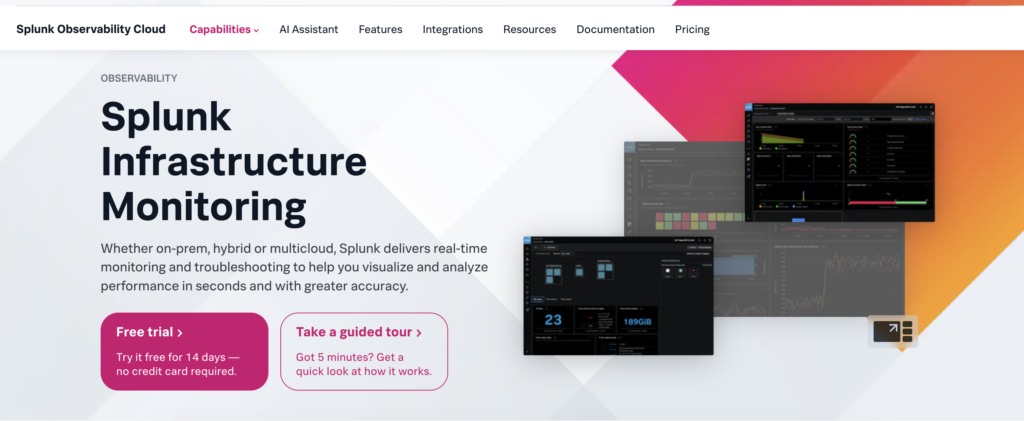
Splunk is widely recognized for its data analysis and observability capabilities. It allows organizations to collect and analyze machine data from across their infrastructure, providing valuable insights into performance and system behavior.
Splunk supports infrastructure monitoring across hybrid environments, including cloud and on-premises systems. Its powerful analytics engine helps teams identify trends, anomalies, and performance issues.
Splunk is especially useful for environments where performance insights and operational intelligence are critical. It enables IT teams to correlate infrastructure data with performance metrics, improving troubleshooting efficiency and operational awareness.
7. Prometheus
Prometheus is an open-source monitoring solution designed for modern, cloud-native infrastructure. It’s widely used in environments that rely on containers and microservices.
Prometheus collects real-time metrics from infrastructure components and stores them in a time-series database. This allows IT teams to analyze performance trends and monitor system health over time.
Prometheus integrates well with modern DevOps environments and provides flexible monitoring capabilities. It supports automated alerting, helping teams respond quickly to infrastructure issues.
Its scalability and open-source flexibility make it a popular choice for organizations adopting modern infrastructure practices.
8. Grafana
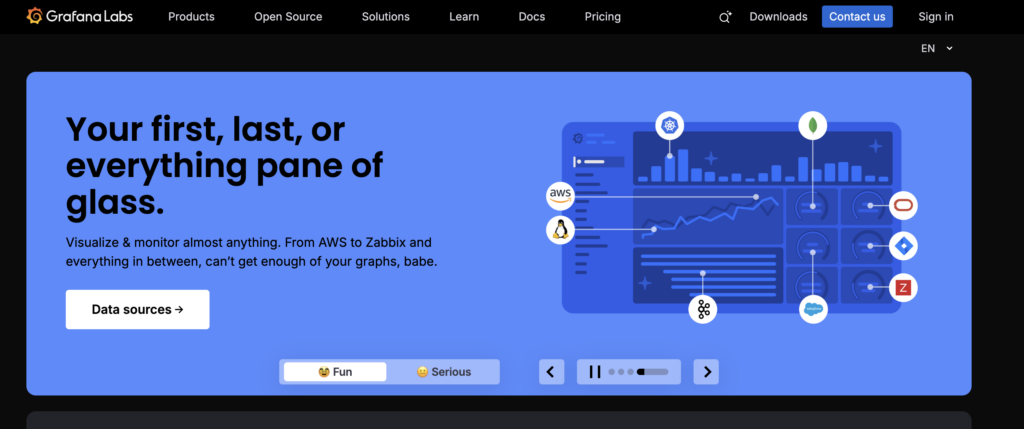
Grafana is a powerful visualization platform that helps organizations understand infrastructure performance through interactive dashboards. It integrates with multiple data sources, providing a unified view of system health.
Grafana enhances visibility by presenting performance metrics in a clear and easy-to-understand format. This makes it easier for IT teams to identify trends and detect anomalies.
The platform plays an important role in environments that rely on complex monitoring systems. It enables teams to visualize performance metrics and improve overall infrastructure management.
Grafana is widely used alongside other monitoring tools to enhance visibility and decision-making.
9. Checkmk
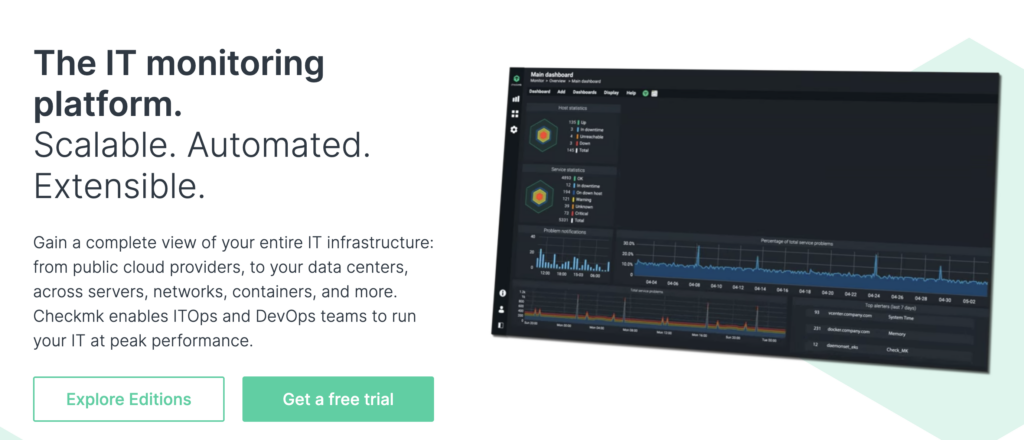
Checkmk is a flexible monitoring platform designed to support infrastructure of all sizes. It provides comprehensive monitoring for networks, servers, applications, and cloud systems.
Checkmk supports automated discovery, allowing IT teams to monitor infrastructure components quickly. This reduces setup time and ensures comprehensive monitoring coverage.
The platform is effective in environments that require strong infrastructure visibility. It provides detailed performance metrics and alerting capabilities, helping teams maintain stable and reliable systems.
Checkmk is suitable for organizations seeking both scalability and flexibility in their monitoring solutions.
10. XorMon
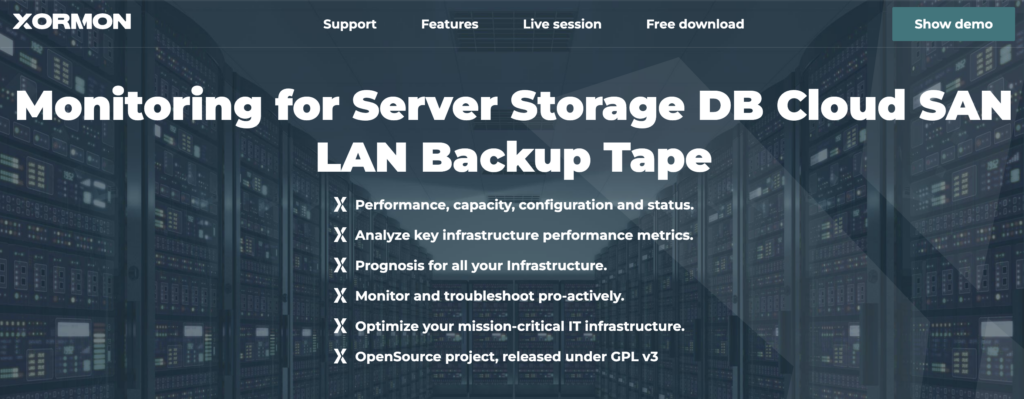
XorMon is a modern infrastructure monitoring platform designed for enterprise environments. It provides detailed insights into servers, storage systems, virtualization platforms, and cloud environments.
XorMon supports monitoring across diverse infrastructure components, providing a centralized view of system health. This helps IT teams identify issues quickly and maintain optimal performance.
The platform offers interactive dashboards, performance analysis tools, and automated alerts. These features allow teams to monitor infrastructure efficiently and respond proactively to potential issues.
XorMon is particularly useful for organizations managing complex and large-scale infrastructure.
Why Infrastructure Monitoring Is Essential in Modern IT
Infrastructure monitoring is essential for maintaining system stability, performance, and reliability. As organizations rely more heavily on digital systems, downtime and performance issues can have significant business impacts.
Monitoring tools provide real-time visibility into infrastructure health, allowing IT teams to detect and resolve issues quickly. They also help organizations optimize resource usage and improve operational efficiency.
Modern monitoring platforms also support distributed systems and cloud environments, making them essential for organizations adopting new technologies.
How to Choose the Right Monitoring Tool
Selecting the right monitoring tool depends on several factors, including infrastructure size, complexity, and business requirements.
Organizations should look for tools that provide scalability, automation, and comprehensive visibility. Ease of use, integration support, and customization options are also important considerations.
Some organizations prefer enterprise platforms with advanced automation, while others choose open-source tools for flexibility and customization.
The best monitoring solution is one that aligns with business goals and provides reliable infrastructure visibility.
Conclusion – Best IT Infrastructure Monitoring Tools
IT infrastructure monitoring tools are essential for ensuring reliable system performance in modern digital environments. As infrastructure continues to evolve, organizations need tools that provide visibility, automation, and proactive insights.
By implementing the right monitoring platform, organizations can improve system reliability, reduce downtime, and ensure infrastructure performs efficiently in 2026 and beyond.